
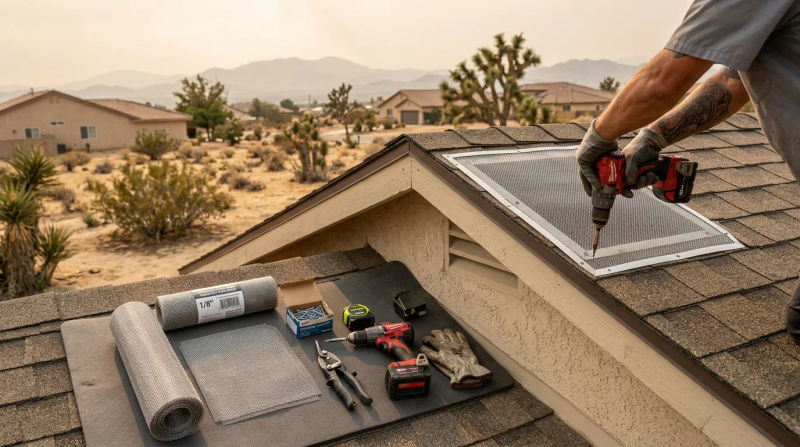
As a Senior Roofing Specialist with over a decade of experience here in the El Mirage area, I know that when late summer arrives, the conversation shifts. The heat is still on, but the dry winds and the threat of fire season become top of mind for every homeowner. One of the most common questions we get is about cost: "How much will it cost to make my home safer?" It's a practical question, and my goal today is to give you a transparent, no-nonsense look at the costs associated with one of the most effective fire-hardening upgrades you can make: retrofitting your roof and attic vents with ember-resistant screens.
Protecting your home from wind-driven embers is a critical step, and understanding the investment is the first part of the process. Let's break down the numbers so you can budget effectively and make an informed decision for your family's safety.
Average Costs in El Mirage
When budgeting for a professional attic vent screen installation in El Mirage, it's helpful to think in terms of both a per-vent cost and a total project cost. Prices can vary, but here are some realistic ranges our customers see based on standardized, professional installations.
- Average Cost Per Vent: You can typically expect to pay between $45 and $85 per vent. This price includes the high-quality mesh material and the labor to custom-fit and securely install it.
- Minimum Project Fee: Most professional roofing companies, including ours, have a minimum service charge to dispatch a fully-equipped truck and a trained technician. This is usually between $200 and $350. This fee often covers the first few vents, with additional vents billed at the per-unit price.
- Total Project Cost for a Typical Home: For a standard single-story home with 8 to 14 vents (including soffit, gable, and roof vents), the total mesh vent screen retrofit cost in CA generally falls between $500 and $1,100.
It's important to note that these are estimates. A home with a dozen small soffit vents will have a different cost profile than a home with two large, hard-to-reach gable vents. The only way to get a precise number is a detailed, on-site evaluation.
Factors That Affect Price
The final quote you receive for fire season roof vent retrofit pricing isn't arbitrary. It's calculated based on several key variables that affect the materials and labor required. As technicians, we assess these factors during our initial inspection.
- Number and Type of Vents: The biggest cost driver is simply how many vents need to be covered. We meticulously count every soffit, eave, gable, ridge, and roof vent. Different types require different installation techniques. A flat dormer vent is more straightforward than a turbine vent that needs to be screened at its base.
- Roof Accessibility and Pitch: Many homes in the El Mirage and Apple Valley areas are classic 1950s and 1960s Ranch-style houses. Their low-pitched roofs are generally safer and easier for our crews to work on, which can help keep labor costs down compared to a steep, multi-story roof. However, factors like landscaping, fences, or patios can still impact ladder placement and access.
- Condition of Existing Vents: During our inspection, we don't just look at what needs to be screened; we assess the vents themselves. If a vent is damaged, rusted, or full of debris, it must be repaired or cleaned first. Attempting to screen a compromised vent is a waste of money and provides a false sense of security. This necessary repair work will be quoted as a separate line item.
- Material Quality: The roof vent screen cost is also influenced by the material used. We exclusively use 1/8-inch mesh, which is the standard for ember resistance. Homeowners can choose between different materials:
- Galvanized Steel: Cost-effective and strong, but can be prone to rust over time, especially if the coating is scratched during installation.
- Stainless Steel: More expensive upfront but offers superior durability and corrosion resistance. This is the material we most often recommend for a long-term, set-it-and-forget-it solution.
- Aluminum: Lightweight and rust-proof, but more easily damaged than steel.
How to Get the Best Value
Securing your home shouldn't mean overpaying. Here are some practical tips I share with homeowners to ensure they get the best possible value without compromising on safety or quality.
- Bundle Services: If you're having our technicians out to install vent screens, consider bundling it with other roof maintenance. Ask about getting your gutters cleaned, inspecting the flashing, or having a general roof tune-up at the same time. Combining services often reduces the overall cost compared to scheduling separate service calls.
- Focus on Long-Term Durability: While a cheaper galvanized screen might save you a little money today, investing in stainless steel mesh often provides better long-term value. You avoid the potential cost and hassle of replacing rusted screens in five to seven years.
- Confirm a Full Vent Count: Before work begins, do a walkthrough of your property with the contractor. Point out every vent you know of and ask them to identify any you may have missed. A common mistake is forgetting about hidden soffit vents or small vents on the back of the house. Getting a comprehensive quote upfront prevents surprise costs later.
- Understand What You're Paying For: A quality installation involves more than just slapping mesh over a hole. Our trained crews use screws and secure fasteners, not staples, to ensure the screen stays in place during high winds. The mesh is custom-cut to fit perfectly, leaving no gaps for embers to penetrate. This meticulous process is what provides real protection.
Questions to Ask Your Contractor
When you receive a quote, you are hiring a team for their expertise and reliability. Here are the essential questions you should ask any contractor before signing a contract. A professional will have clear, confident answers.
- What size and type of mesh do you use for fire-hardening? (The correct answer should be 1/8-inch or smaller, and they should be able to explain the material options.)
- How will you attach the screens to the vents? (Look for answers that involve mechanical fasteners like screws, not just adhesives or staples which can fail in heat and wind.)
- Does your quote include all vents on my home, including soffit, gable, and foundation vents?
- Are your installation crews insured for this type of work?
- Will you inspect the vents for damage before installing the screens? What is the process if a repair is needed?
- How will this installation affect my attic's ventilation and airflow? (A professional installation with proper mesh should have a negligible impact on airflow.)
Asking these questions helps you vet the contractor's knowledge and ensures you're getting a code-compliant, effective solution from a reputable company like Sabrina Wunsch's roofer Co.
Preparing your home for fire season is a proactive investment in your property and peace of mind. Retrofitting your vents is one of the most cost-effective measures you can take to prevent ember intrusion, which is a primary cause of home loss during wildfires. By understanding the costs and the process, you can confidently take the next step to protect what matters most.
For a personalized estimate and a detailed inspection of your home's vents in El Mirage, contact Sabrina Wunsch's roofer Co for a free consultation. Our team is ready to help you make your home more resilient.